Coriander Powder Deep Dive: Uses Beyond the Obvious
There's a good chance coriander powder is the spice you reach for without thinking a pinch here, a spoon there, folded into almost every curry base without much ceremony. It's so common in Indian cooking that it rarely gets a story of its own.
That's a mistake. Coriander powder is one of the most versatile spices in the pantry, and most of what it can do goes unused.
The Role It Actually Plays
Coriander powder isn't there for heat that's chilli's job. It isn't there for colour that's turmeric's. Coriander's job is body. It's the spice that gives a curry its thickness and roundness, the one that makes a gravy taste "finished" instead of thin. Chefs sometimes call it the "binding spice" it doesn't announce itself, but take it out of a dish and something clearly feels missing.
That's also why it's used in larger quantities than most other spices in a curry base often more coriander powder goes into a dish than any other single spice, precisely because its job is structural, not decorative.
Beyond the Curry Pot
In marinades. Coriander powder mixed with a little oil, lemon, and salt makes a marinade base that works on paneer, chicken, or vegetables before grilling the citrus notes in coriander seed pair naturally with acid.
In lentil and bean dishes. A spoon of coriander powder added early to dal or rajma not just at the tempering stage gives the dish a rounder, less sharp finish than chilli and turmeric alone.
In dry roasted snacks. Roasted peanuts, makhana, or chana tossed with coriander powder, a little salt, and a pinch of chilli make a far more balanced snack than chilli powder alone, which can turn one-note and harsh.
In raita and yogurt-based dips. A light dusting of roasted coriander powder over raita adds a warm, earthy note that plain cumin doesn't quite reach on its own.
In soups. A pinch stirred into tomato or lentil soup even non-Indian recipes adds warmth without pushing the dish toward "curry" territory. It's subtle enough to sit in the background.
In dry spice rubs for roasted vegetables. Coriander powder, a little oil, and salt on roasted cauliflower, sweet potato, or carrots before the oven gives a flavour depth that black pepper alone can't provide.
A Simple Way to Taste the Difference
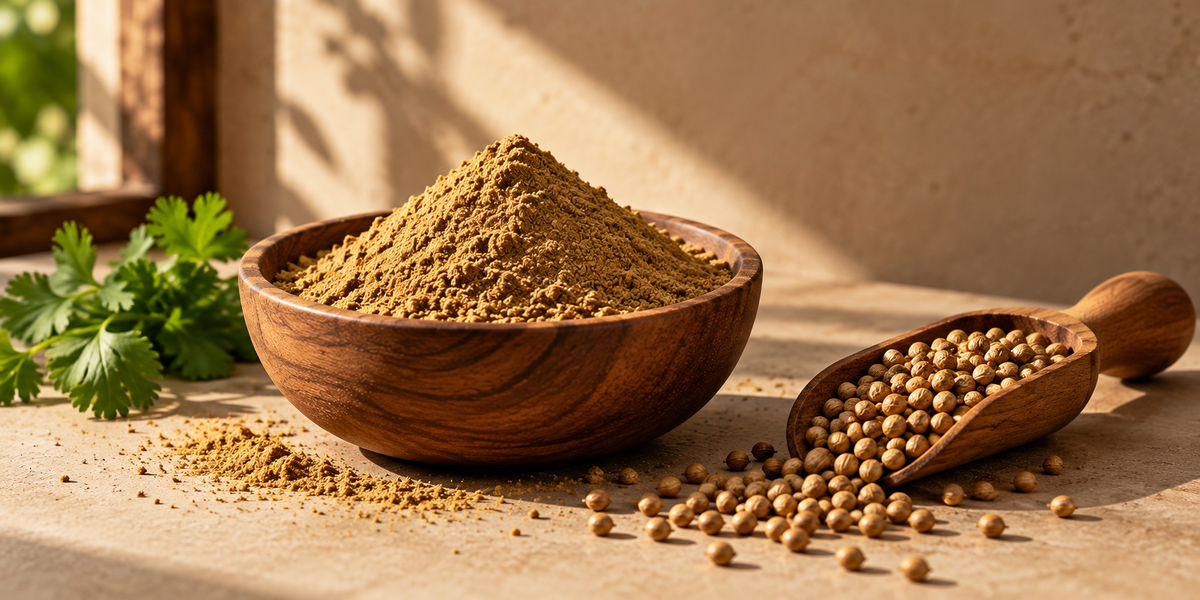
Take a pinch of coriander powder and taste it plain. If it tastes musty, dusty, or like almost nothing it's old, poorly stored, or already losing its natural oils. Fresh coriander powder should taste faintly citrusy, slightly sweet, and warm closer to what you'd smell from the fresh seed than most people expect.
That's the test that matters more than the expiry date on the pack.
The One Mistake Most Kitchens Make
Adding coriander powder straight into hot oil, the way cumin or mustard seeds are tempered. Coriander powder burns fast and turns bitter when it hits high heat directly. It's better added after the onions and tomatoes are already cooking, or toward the middle of the process giving it time to cook through without scorching.